Electrical work has a way of punishing vague knowledge. A person can understand the theory, know the switchboard layout, and still be caught out by one rushed decision near a live low voltage panel. That is why low voltage rescue training sits in a practical space. It is not just a compliance line on a work file. It is training for the first few minutes of an electrical incident, when the responder has to think clearly, avoid becoming the second casualty, and start lifesaving care if the situation calls for it.
The current nationally recognised unit for this skill set is UETDRMP018 Perform rescue from a live low voltage panel. It supersedes and is equivalent to UETDRMP007, and many people in the industry will also remember older wording such as UETDRRF004. If your workplace still uses the older unit names in job cards, induction documents, tender packs, or safety matrices, it is worth updating the language. The intent remains familiar, but the current unit code matters when booking training, checking competency records, or responding to an audit.
For many electrical workers, the unit is completed alongside HLTAID009 Provide cardiopulmonary resuscitation, commonly described as CPR LVR, LVR CPR training, or a CPR LVR course. First Aid Pro’s CPR LVR course combines UETDRMP018 with HLTAID009 and is delivered face to face, with no online pre-learning. Public course information lists the duration as 4 hours, with same-day certificates and a 12-month validity period.
That combination makes sense. A low voltage rescue may begin with isolating power and removing a person from danger, but it can quickly become a resuscitation event. Training the two together keeps the response connected, rather than treating rescue and CPR as separate boxes.
What UETDRMP018 actually refers to
UETDRMP018 is titled Perform rescue from a live low voltage panel. The wording is important because it describes a very specific emergency scenario. This is not lvr and cpr course general electrical theory, and it is not a broad first aid course. It focuses on the rescue of a person from a live low voltage panel while managing risk to the rescuer and others nearby.
The term “low voltage” can sound harmless to people outside the electrical trade. It is not. In Australian electrical contexts, low voltage still includes voltages capable of causing fatal shock, burns, falls, cardiac arrest, and secondary trauma. Anyone who has spent time around switchboards, plant rooms, construction sites, or maintenance shutdowns knows that the hazard is not abstract. It may be a live panel, a damaged cable, an exposed conductor, a fault condition, or a person frozen in contact with energised equipment.
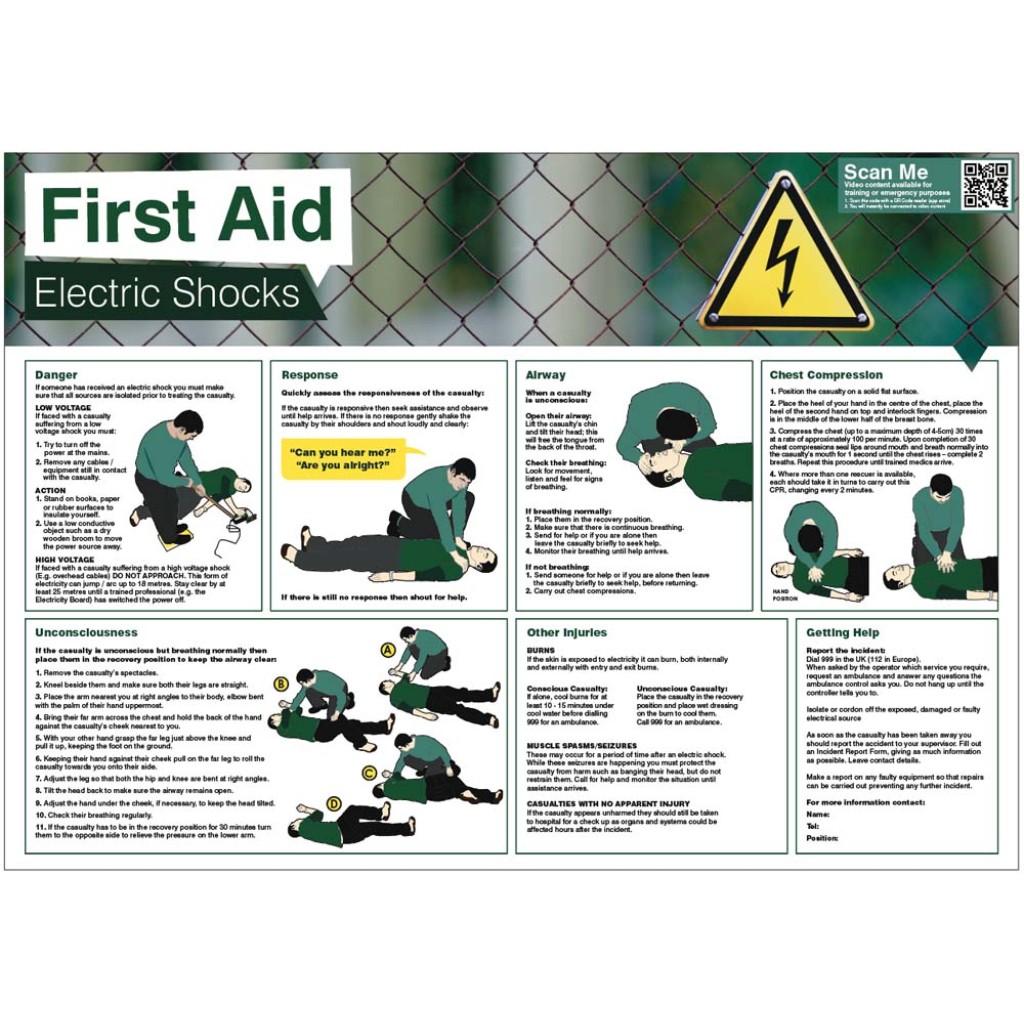
The value of low voltage rescue training is that it gives workers a rehearsed approach. In a real incident, panic compresses time. People shout. Someone may instinctively reach for the casualty. The safe action is often not the most instinctive one. Training builds the habit of stopping long enough to avoid direct contact, isolate where possible, use appropriate rescue equipment, and move into first aid only when it is safe to do so.
UETDRMP018 sits in that practical, high-consequence space. It is designed for people who may need to respond near electrical installations rather than wait for someone else to arrive.
The change from older unit codes
The current unit UETDRMP018 supersedes and is equivalent to UETDRMP007. First Aid Pro also describes the current wording as replacing the older UETDRRF004 and UETDRMP007 versions that many workers still recognise. That can create confusion, especially for workers who have kept up regular renewals over the years and now see a different code on course pages.
In practical terms, the current code is the one to look for when booking low voltage rescue training. If a supervisor asks for an “LVR ticket” or “LVR CPR”, they may not say UETDRMP018 out loud, but that is the current nationally recognised low voltage rescue unit you should expect to see.
The word “equivalent” matters as well. It means UETDRMP018 has replaced UETDRMP007 in the national training framework while retaining equivalence. However, workplaces and clients often specify currency rather than historical completion. A worker who completed an older unit years ago should not assume it satisfies current workplace requirements, particularly where annual refreshers are expected. The question is rarely, “Have you ever done it?” It is usually, “Is your current training valid?”
That distinction becomes important on larger worksites. Construction, mining, energy, infrastructure, and maintenance environments often have tight pre-start checks. A subcontractor can be ready to work, tools packed and vehicle loaded, only to be stopped because the training matrix shows an expired or outdated entry. It is a frustrating delay, and it is usually avoidable with a quick check before mobilisation.
Why CPR is commonly paired with LVR
Low voltage rescue and CPR are closely linked because electric shock can interfere with normal heart rhythm and breathing. Not every electrical incident leads to cardiac arrest, but when it does, the first few minutes are critical. A responder may need to remove the casualty from danger, assess responsiveness and breathing, call for emergency help, and begin CPR.
That is why many providers offer CPR LVR training as a combined session. First Aid Pro’s CPR LVR course includes both UETDRMP018 Perform rescue from a live low voltage panel and HLTAID009 Provide CPR. The pairing reflects what can happen in the field. The rescue does not end when the person is clear of the panel. The next decision may be whether to start compressions.
HLTAID009 has its own assessment requirements. One key physical requirement is the ability to perform at least 2 minutes of uninterrupted CPR on an adult manikin placed on the floor. That is not a small detail. People sometimes underestimate how physically demanding quality compressions are, especially on the floor, with correct depth, rhythm, and body position. Learners need to be able to kneel, maintain posture, and continue compressions without stopping during the assessment.
In a classroom, 2 minutes can feel longer than expected. On a worksite, surrounded by noise and stress, it can feel longer again. The training environment gives participants the chance to experience that physical effort in a controlled setting before they ever face it under pressure.
Who typically needs low voltage rescue training
The course is aimed at people who may work near electrical hazards or have a responsibility to respond if an incident occurs. First Aid Pro identifies electricians, electrical workers, workplace safety officers, builders, construction workers, mining professionals, and energy personnel as common participants.
The obvious group is licensed electricians and electrical apprentices, particularly those working around switchboards, live testing, maintenance, service calls, or industrial equipment. Yet they are not the only ones who benefit. Builders and construction workers may operate near temporary boards or energised areas. Safety officers may be expected to coordinate incident response. Mining and energy personnel may be exposed to electrical infrastructure as part of broader site operations.
There is also a workplace planning angle. A business may decide that certain supervisors, leading hands, or maintenance team members should keep CPR LVR current because they are often first on scene. That does not turn them into electricians. It gives them a defined emergency response capability within the limits of their role and training.
The best training decisions usually come from a realistic look at the work, not from job titles alone. If a person regularly works around live electrical panels, isolation points, plant rooms, switch rooms, construction power, or maintenance activities, low voltage rescue training may be relevant. If a person is listed as part of the emergency response structure for such environments, it may also be relevant.
What a face-to-face CPR LVR course involves
First Aid Pro’s CPR LVR course is delivered face to face with no online pre-learning. That suits this kind of training. There are some subjects where online theory can work well, but low voltage rescue and CPR both rely on physical practice. The rescuer’s body position, distance from danger, use of equipment, and movement around a casualty matter. CPR, in particular, needs hands-on assessment.
The public course duration is listed as 4 hours. That is a compact session, so participants should arrive ready to focus. In a typical group, you might have experienced electricians renewing a familiar competency, apprentices doing it for the first time, and safety staff who understand emergency procedures but have less practical exposure to panels. The trainer has to keep the session moving while still checking competence.
A good face-to-face session also gives people a chance to ask the awkward questions that do not always appear in manuals. What if the isolation point is not obvious? What if other workers are crowding the area? What if the person appears conscious but confused? What if the space is tight? The answers depend on the specific scenario, but training gives participants a safer decision-making framework.
The strongest participants are often not the loudest or most confident. They are the ones who slow down enough to identify danger before rushing in. In electrical rescue, that pause is not hesitation. It is control.
The practical sequence in an electrical rescue
Electrical rescue training is built around a disciplined response. The exact actions depend on the circumstances, but the underlying principle remains consistent: protect yourself first, then remove the casualty from danger if it is safe, then provide appropriate first aid.
A simplified way to think about the response is:
Assess the scene for electrical danger and avoid direct contact with the casualty while the hazard remains live. Isolate the power supply if it is safe and possible to do so. Use appropriate rescue methods and equipment to separate the casualty from the source of danger. Check responsiveness and breathing once it is safe to approach. Call emergency services and begin CPR if required, continuing until help arrives or you are relieved.That list looks neat on a page. Real incidents are rarely neat. Access may be blocked. People may be distressed. The casualty may be in an awkward position. The responder may be dealing with poor lighting, machinery noise, rain, confined space, or incomplete information. Training does not remove those complications, but it gives workers a starting point that is safer than instinct alone.
The most dangerous instinct is the urge to grab the person immediately. It comes from the right place, but in an electrical incident it can be fatal. Low voltage rescue training reinforces that the rescuer must not become part of the circuit. Every response starts with scene safety.
Currency, certificates, and annual refreshers
First Aid Pro states that certificates are issued same day and are valid for 12 months. It also recommends regular, annual refreshers. For many workplaces, that annual rhythm is already familiar. CPR skills decay when they are not practised, and LVR procedures need to stay fresh because they are rarely used but must be ready when needed.
Same-day certification can be useful for workers who need to update a record quickly before returning to site or starting a new job. That said, leaving it until the last minute is risky. Courses can fill, work rosters can change, and a missed renewal can affect site access. A simple reminder set 30 to 60 days before expiry saves a lot of inconvenience.
There is a human factor here too. People who renew annually tend to move faster through the practical components because the actions feel familiar. They still need to demonstrate competence, but they are not starting cold. Workers who leave several years between sessions often remember the broad idea but lose confidence in the details. In emergency response, confidence should come from recent practice, not memory from a course long past.
A current certificate also helps supervisors. It provides a clear, auditable record that the worker has completed the required training within the expected timeframe. For businesses managing multiple sites or crews, that clarity matters.
Public course locations and workplace delivery
First Aid Pro lists public CPR LVR training options at several venues, including Brisbane, Logan Central, Sydney, Adelaide, and North Hobart. Verified venue details include Level 8, 117 Queen Street in Brisbane; Unit 9, 84 Wembley Road in Logan Central; Level 15, Suite 1501, 370 Pitt Street in Sydney; Level 2, 50 King William Street in Adelaide; and 393 Argyle Street in North Hobart at Rydges Hobart, with access via 15 Lewis Street.
For individual workers, public courses are often the simplest option. You book a seat, attend the session, complete the required assessment, and receive the certificate if competent. Public pricing shown by First Aid Pro indicates $99 for the course, with some pages showing limited-time discount pricing on selected dates.
For employers, onsite delivery can be more efficient. First Aid Pro states it can deliver onsite workplace CPR/LVR training for groups of 5 to 24 participants, with flexible scheduling, and its corporate training information refers to workplace and group delivery Australia-wide. That model suits businesses trying to reduce downtime. Instead of sending six or twelve workers to separate public sessions across different days, the trainer comes to the workplace and the team completes the training together.
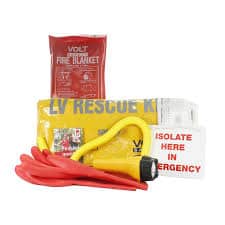
Onsite training also tends to prompt better internal conversations. Workers ask questions connected to their actual environment. Supervisors can think about rescue kits, access routes, emergency communications, and where training records are stored. The course remains nationally recognised training, but the discussion feels closer to the work people perform each day.
Choosing between a public course and onsite training
The better option depends on the size of the group, the urgency of the renewal, and the way the business operates. A sole trader or individual electrician may prefer a public course because it is quick to book and does not require coordination with others. A company with multiple workers expiring around the same time may get better value from onsite delivery.
A practical comparison looks like this:
| Training option | Best suited to | Practical advantage | |---|---|---| | Public CPR LVR course | Individuals or small numbers of workers | Easy to book into scheduled sessions | | Onsite workplace training | Groups of 5 to 24 participants | Reduces travel time and supports team-wide currency | | Regular annual booking | Businesses with recurring compliance needs | Keeps records predictable and reduces expiry gaps |
The main trade-off is scheduling. Public courses run at set times and locations. Onsite courses need enough participants and a suitable time for the workplace. For businesses with rotating rosters, shutdown periods, or remote teams, planning early makes a significant difference.
There is also a cultural benefit to group training. When a crew trains together, they develop a shared understanding of what should happen in an emergency. That does not guarantee a perfect response, but it reduces the chance of five people acting in five different ways when the pressure is on.
Common misunderstandings about LVR CPR training
One common misunderstanding is that low voltage rescue training is only for electricians. Electricians are certainly a core audience, but the course is also relevant to other workers who may be exposed to electrical environments or expected to respond under workplace procedures. The key question is not simply “What is your job title?” but “Could you reasonably be required to act in or near this type of emergency?”
Another misunderstanding is that CPR alone is enough. CPR is essential, but it does not teach the electrical rescue component. In an electrical incident, reaching the casualty safely is the first problem. A person who knows CPR but has no LVR training may still make a dangerous choice near a live panel. The combined CPR LVR course addresses both parts of the response.
Some workers also assume that because they completed an older LVR unit, they do not need to worry about the current code. That can be a costly assumption. UETDRMP018 is the current unit, and certificates are commonly treated as valid for 12 months. If your workplace, client, or regulator expects current training, an old certificate may not be accepted regardless of past experience.
The final misunderstanding is that a short course is automatically simple. Four hours is not a long day, but the assessment still requires active participation. CPR must be performed on the floor. Rescue procedures must be understood and demonstrated. Participants need to arrive physically able to complete the required tasks and mentally ready to engage.
The physical side of CPR assessment
The requirement to complete at least 2 minutes of uninterrupted CPR on an adult manikin placed on the floor is worth taking seriously. It affects anyone with knee, back, wrist, shoulder, or mobility limitations. The assessment is not performed at table height for convenience. It reflects the reality that casualties are often managed on the ground.
Good compressions use more than arm strength. They rely on body position, locked elbows, shoulders over hands, and a steady rhythm. People who try to perform compressions from a poor position fatigue quickly. In training, that fatigue becomes obvious after the first minute. By the second minute, technique can deteriorate unless the participant corrects posture and uses body weight properly.
This is one reason face-to-face CPR LVR training has value. A trainer can see whether compressions are effective, whether the participant is positioned correctly, and whether they can sustain the effort. Reading about CPR does not show you how quickly your shoulders tire or how much difference a small change in posture makes.
For employers, the physical requirement should be communicated before the course. It is better for participants to know what is expected than to discover it during assessment. That is particularly important for workers returning from injury or those with known limitations.
How supervisors can keep training records under control
Training records become messy when they are treated as an afterthought. LVR and CPR currency should be visible in the same way licences, inductions, and high-risk work credentials are visible. If a business relies on workers being current, it needs a simple way to track expiry dates.
The easiest approach is to record the unit code, completion date, expiry date, provider, and certificate location as soon as the worker completes the course. Waiting until a tender submission or site mobilisation almost guarantees someone will be chasing paperwork under pressure. For companies with several crews, a monthly review of upcoming expiries is usually enough to prevent surprises.
Supervisors should also standardise the wording used internally. If one spreadsheet says “LVR,” another says “CPR LVR,” another says “UETDRMP007,” and another says “low voltage rescue,” it becomes harder to know who is current in the present unit. Using UETDRMP018 Perform rescue from a live low voltage panel and HLTAID009 Provide CPR makes the record clearer.
This is especially useful when dealing with clients who ask for evidence before approving workers for site. Clear records reduce back-and-forth and show that the business understands the current training framework.
Why the current unit matters in tender and site access checks
Training currency often becomes visible during tendering, onboarding, or site access approval. A principal contractor may request evidence of worker competencies. A mining or energy site may require current CPR LVR before allowing a worker into certain areas. A builder may check documentation before a subcontractor starts work around temporary power or electrical systems.
In those settings, the exact unit code can matter. UETDRMP018 is the current unit replacing older versions. If a document still lists UETDRMP007 or UETDRRF004, the person reviewing it may ask for clarification. Even where equivalence exists, outdated wording can slow approval because someone has to check what it means.

Updating internal templates is a small administrative task with a practical payoff. SWMS references, training matrices, onboarding forms, subcontractor requirements, and HR systems should all use the current unit title and code where appropriate. That avoids confusion for workers and gives clients confidence that the business is not relying on stale compliance language.
A practical view from the field
People sometimes talk about safety training as if it exists outside the work. Anyone who has been around electrical worksites knows the opposite is true. The training is part of the job because the risks are part of the job.
A maintenance electrician called to a fault late in the day may be tired. A construction crew may be working around temporary power during a busy handover period. A safety officer may be pulled between multiple tasks when an incident occurs. These are ordinary pressures, not rare exceptions. Low voltage rescue training gives people a rehearsed response before those pressures arrive.
The best outcome is that the training is never needed. The second-best outcome is that if it is needed, the responder does not improvise from panic. They recognise the hazard, keep themselves clear, isolate if safe, use the correct rescue approach, and move into CPR if required. That is the reason annual CPR LVR training remains a sensible expectation in electrical and electrical-adjacent work.
Booking the right course
When booking, look for the current unit UETDRMP018 Perform rescue from a live low voltage panel and, where CPR is required, HLTAID009 Provide CPR. First Aid Pro’s CPR LVR course combines those units, runs face to face with no online pre-learning, and is publicly listed as a 4-hour course. Certificates are issued same day for competent participants and are valid for 12 months.
Workers searching online may use different terms: lvr training, lvr course, low voltage rescue course, low voltage rescue training, lvr cpr, cpr lvr, or cpr lvr training. Those phrases often point to the same broad need, but the unit code confirms whether the course aligns with the current nationally recognised training.
For individuals, the main things to check are location, date, start time, price, physical ability to complete CPR on the floor, and whether the certificate will meet the workplace requirement. For employers, the decision may include public versus onsite delivery, group size, roster impact, and how certificates will be captured in the training register afterward.
UETDRMP018 is not just a new label on an old idea. It is the current reference point for a skill that remains vital wherever workers may face live low voltage electrical hazards. Keeping it current, paired with CPR where required, is a practical investment in worker safety, site readiness, and a corporate low voltage rescue training more controlled response when minutes matter.